Tesla Model 3 Wheel Visualizer
See wheels on your own Model 3 before you buy — upload a photo, pick real aftermarket wheels, and get a photoreal render in about ten seconds.
How the visualizer works on your Model 3
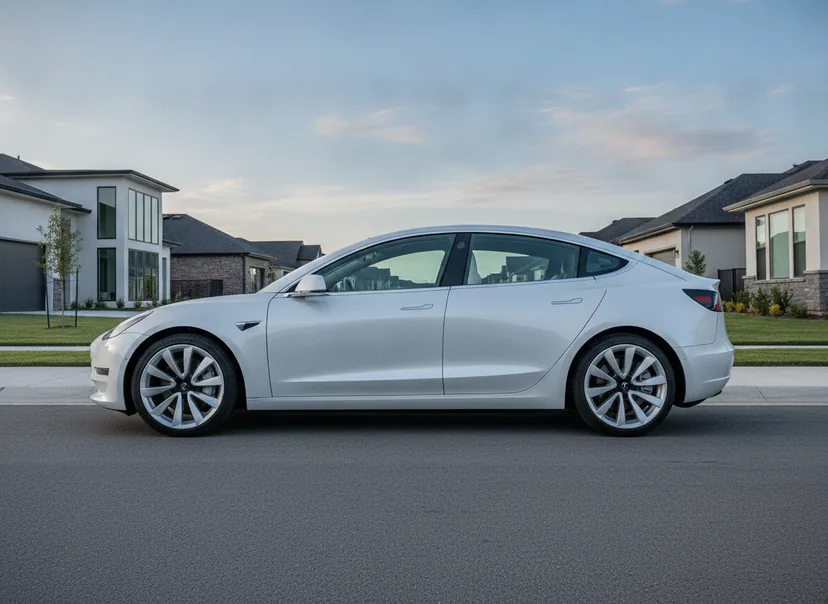
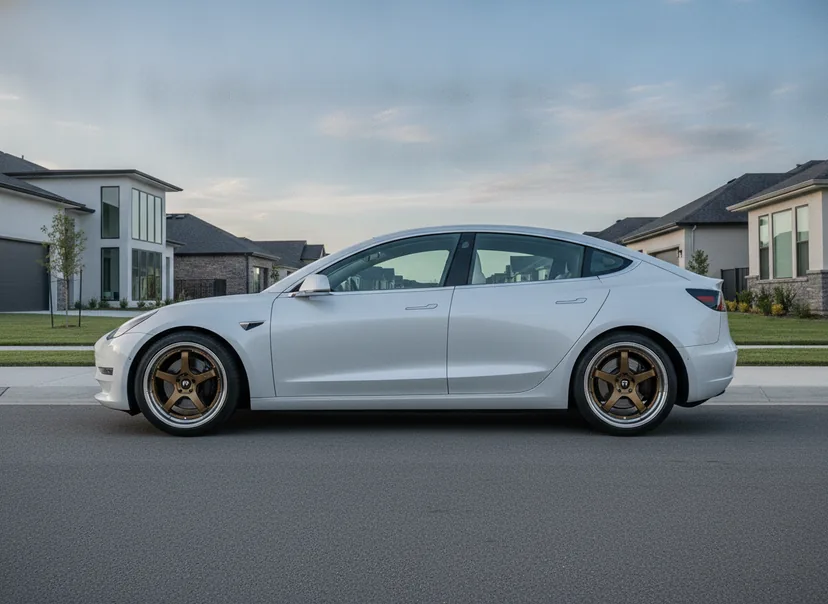
Drag the line. Actual WheelPeek output: an AI-generated demo Model 3 re-rendered with Forged Metallics FM05 Ronin in gloss bronze — the same ten-second pipeline that runs on a photo of your own car.
WheelPeek works with photos of any Model 3 — you don't need your VIN or a trim code to start, because it reads the car itself:
- Add a photo of your car. Open the free beta and snap or import a shot of your Model 3 — a clean side or front three-quarter angle in even light renders best. Not near the car? Generate a demo car and play with it first.
- Let the AI read it. It identifies the make, model, bolt pattern and OEM wheel sizes from the photo and finds the wheels automatically, so it already knows a Model 3 is a
5x114.3car on 18- to 20-inch rims. - Pick real wheels and render. Browse 1,600+ real wheels from 30 brands with FITS badges flagging what matches your car's pattern and sizes, then tap: a photoreal HD image replaces your photo in about ten seconds, calipers showing through the spokes.
- Compare, then decide. Heart your favorites and line them up on a 2×2 or 3×3 comparison sheet — same car, same angle, only the wheels change — or share a numbered voting card so friends can reply with a number.
Try wheels on this Model 3
The renders below are real WheelPeek output on a demo Model 3; pick a wheel to swap it.
Forged Metallics FM05 Ronin — gloss bronze. Identification only; confirm fitment with the seller.
Now try it on a photo of your own Model 3 — no sign-up for your first five renders
Tesla Model 3 wheel specs & fitment
Published factory figures for US-market cars — verify your exact year and trim before ordering.
| Generation | Bolt pattern | Center bore | OEM wheel sizes | Typical OEM tire sizes |
|---|---|---|---|---|
| Model 3 (2017–2023) | 5x114.3 |
64.1 mm | 18×8.5, 19×8.5, 20×8.5–9 (Performance) | 235/45R18, 235/40R19, 235/35R20 |
| Model 3 "Highland" (2024+) | 5x114.3 |
64.1 mm | 18×8.5, 19×8.5, 20×9 front / 20×10 rear (Performance) | 235/45R18, 235/40R19; Performance 235/35R20 front, 275/30R20 rear |
One pattern across the whole run makes the Model 3 unusually easy to shop for. 5x114.3 is the most common bolt pattern in the WheelPeek catalog, so the selection is wide and prices are competitive — a far nicer position to be in than owners of cars whose pattern changed between generations. The 64.1 mm hub bore is the part people skip: most aftermarket wheels are machined with a bigger bore and use hub-centric rings to sit true on the hub, and without the right rings you get a vibration at highway speed that no amount of balancing fixes.
Offset is where Model 3 fitment actually gets decided. The factory 18- and 19-inch wheels run a fairly high offset — published figures sit in the high +30s to +40 mm depending on model year and source — while the 20-inch Performance wheel drops to about +34 up front and pushes wider. Aftermarket sets in the +33 to +35 range are common for a flusher stance, but every millimeter you drop the offset pushes the wheel outward toward the fender — and away from the suspension on the inside — so width and offset have to be considered together. Lugs are M14x1.5 and torque to roughly 129 lb-ft (175 Nm).
Honest note: these fitment specs are estimates compiled from manufacturer and published data, and they vary by trim, model year and market. Always verify bolt pattern, offset, width and brake clearance with the seller or manufacturer before ordering.
Sources & scope: the table covers the generations listed above; figures vary by trim, model year and market. Factory figures are compiled from published manufacturer specifications and cross-checked against the T Sportline Model 3 wheel guide, which is also the source of the Quick fitment check preset below. Reviewed by the WheelPeek team, September 2026.
Quick fitment check: a typical factory setup here is 18×8.5 at ET40 on 235/45R18. Model a change with the free wheel offset calculator or tire size calculator. The wheel offset visualizer guide shows what those offset changes actually look like on a car — poke, flush or tuck.
Popular Model 3 setups and looks
The cheapest change on a Model 3 costs nothing: the 18-inch factory wheel wears a clip-on plastic aero cover, and underneath is a finished alloy — silver on the 2017–2023 Aero, dark gray on the Highland's Photon wheel. Pulling the covers gives you a completely different car for the price of ten minutes, and it's worth trying before you spend anything, if only to calibrate how much you actually want to change.
Beyond that, a few habits show up again and again on this car:
- Square, not staggered. Every Model 3 except the Highland Performance leaves the factory square, and most owners stay that way — it keeps tire rotation on the table and keeps the rear from looking heavy on a car with fairly subtle hips.
- 18s and 19s do the work. Owners who drive a lot tend to stay on 18s for range and ride; 19s are the popular middle ground; 20s look best on lowered cars but ask the most of the ride quality and the range figure.
- Finish follows paint. Satin black and gunmetal are the safe default on white, black and gray cars. Bronze and satin bronze pop hardest on blue and red. A machined or polished lip brightens a dark car but shows curb rash for the rest of its life.
- Weight gets discussed more than on gas cars. The Model 3 is heavy, and unsprung weight is felt in both ride and efficiency, so flow-formed and lighter cast wheels come up constantly in owner threads.
- Open spokes show what's behind them. A thin multi-spoke or split-spoke design puts your brake hardware on display — flattering if the calipers are painted, less so if they aren't.
Wheels in the catalog
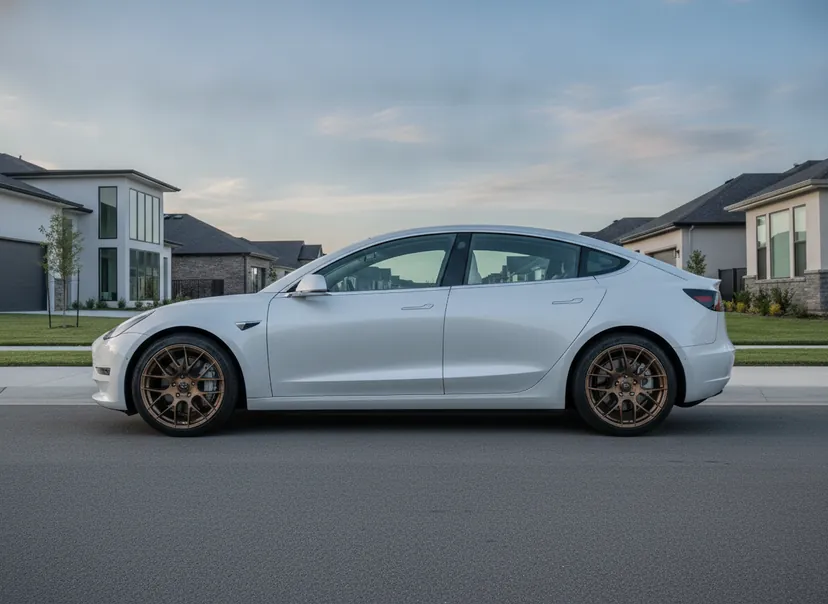
The catalog holds 1,600+ real aftermarket wheels from 30 brands, each with the manufacturer's own specs rather than a generic 3D model. Because 5x114.3 is the most widely produced pattern in the industry, the Model 3 sees more of that catalog than almost any other car on the site. Brands that come up often on Teslas — Vossen, Rohana, Titan 7, Enkei, ESR and Aodhan — are all in there, spanning concave luxury faces, lightweight flow-formed designs and budget-friendly sets.
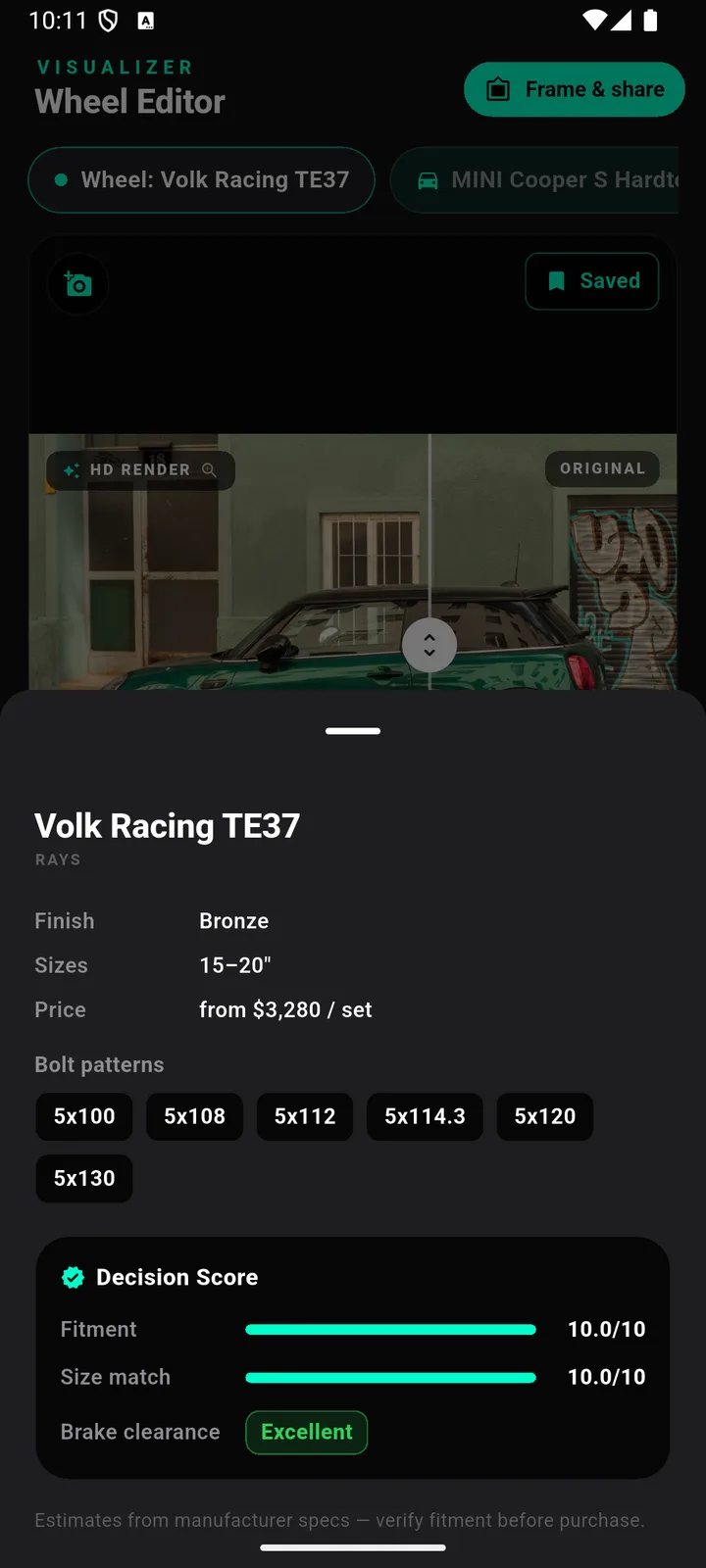
We won't tell you a specific wheel model fits your car from a web page. Inside the app, FITS badges and the Decision Score do that check against the pattern and sizes detected on your actual Model 3, including a brake-clearance rating — and even then, confirm with the seller before you order.
FAQ
Will aftermarket wheels fit my Tesla Model 3?
Every Model 3 built so far — 2017 cars through the current Highland — uses a 5x114.3 bolt pattern with a 64.1 mm center bore and M14x1.5 studs, so the pattern itself is one of the easiest in the aftermarket to shop for. Fitment still comes down to diameter, width, offset and brake clearance. Most aftermarket wheels are machined with a larger bore and rely on hub-centric rings to center on the 64.1 mm hub, so check that the seller includes the right rings for your car.
Do 2024+ Highland wheels use the same fitment as earlier Model 3s?
Yes for the parts that decide whether a wheel bolts on: the Highland refresh kept the 5x114.3 pattern and the 64.1 mm hub, so a wheel that fits a 2019 car fits a 2025 one. The details did move. Published factory offsets for the 18-inch and 19-inch wheels sit in the high +30s to +40 mm depending on the source and model year, and the Highland Performance is the first Model 3 to leave the factory staggered, with a wider rear wheel and tire than the front. Match your own car's numbers rather than assuming the generations are identical.
Do bigger wheels hurt range or ride on a Model 3?
They can, and on an EV the difference is easy to measure. The EPA figures for the 2024 Long Range All-Wheel Drive list 341 miles on the 18-inch wheel and 305 miles on the 19-inch — roughly a ten percent swing, driven mostly by tire rolling resistance and aerodynamics rather than the rim itself. Heavier wheels and shorter sidewalls also firm up the ride on a car that is already firm. It is a real trade, which is why it helps to see the look before you commit to it.
Do Tesla Model Y wheels fit a Model 3?
They share the hardware: both are 5x114.3 with a 64.1 mm center bore, so Model Y wheels physically bolt to a Model 3. Sizes are the catch. The Model Y runs taller and wider factory tires, so overall diameter, width and offset all need checking against the Model 3 before anything gets mounted. Treat it as a wheel-by-wheel question rather than a blanket yes.
Is it free, and does it work with my model year?
WheelPeek is free during the public beta, runs in your browser, and takes about ten seconds per render. It works with photos of any Model 3, from first-generation 2017 cars to the current Highland, because the AI reads the make, model, bolt pattern and OEM wheel sizes out of the photo rather than from a year-and-trim menu. If your car is modified, a custom fitment override lets you tell the app what you are actually running so the scoring follows your build.