Honda Civic Wheel Visualizer
See wheels on your own Civic before you buy — upload a photo, pick real aftermarket wheels, and get a photoreal render in about ten seconds.
How the visualizer works on your Civic
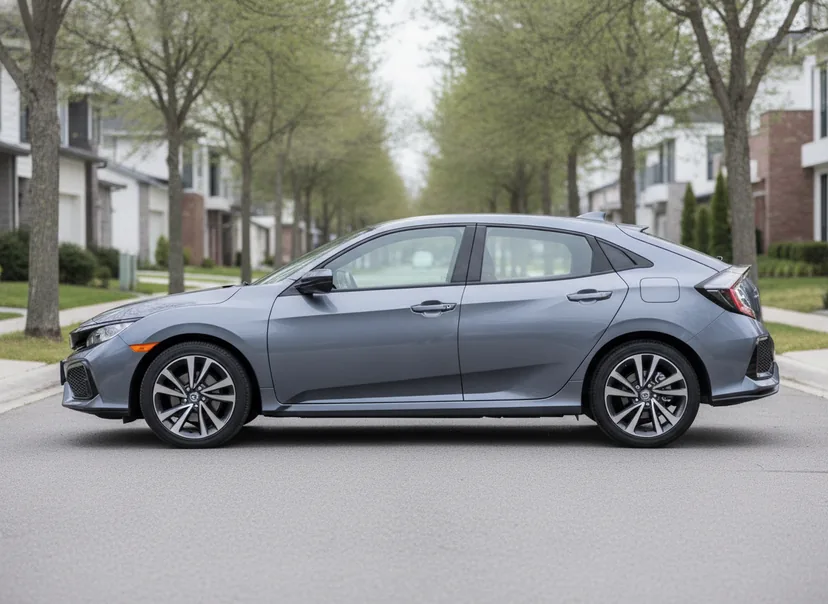
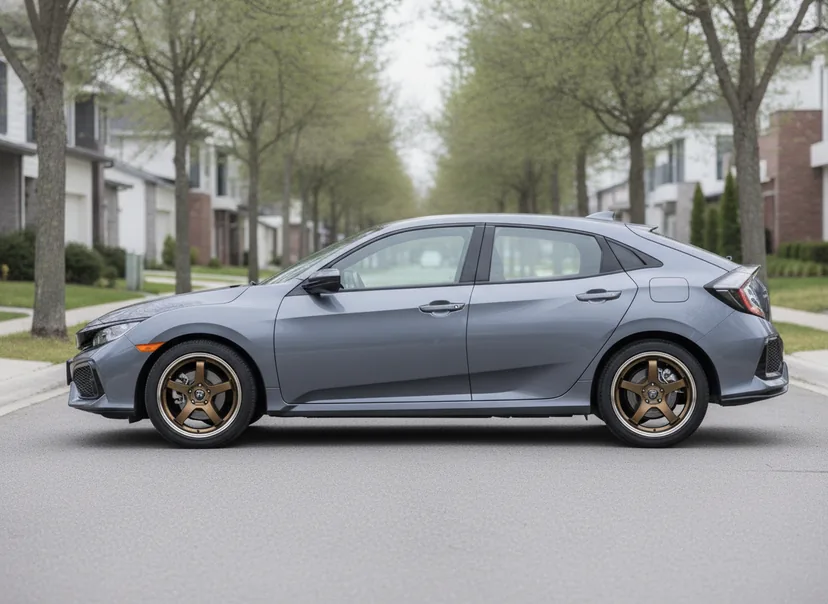
Drag the line. Actual WheelPeek output: an AI-generated demo Civic re-rendered with Forged Metallics FM05 Ronin in gloss bronze — the same ten-second pipeline that runs on a photo of your own car.
WheelPeek works with photos of any Civic — sedan, coupe, hatchback, Si or Type R. No VIN or trim code needed, because it reads the car in front of it:
- Add a photo of your car. Open the free beta and snap or import a shot of your Civic — a clean side or front three-quarter angle in even light renders best. Not near the car? Generate a demo car and play with it first.
- Let the AI read it. It identifies the make, model, bolt pattern and OEM wheel sizes from the photo and finds the wheels automatically, so it already knows a modern Civic is a
5x114.3car running 16- to 18-inch rims — and that a Type R is not. - Pick real wheels and render. Browse 1,600+ real wheels from 30 brands with FITS badges flagging what matches your car's pattern and sizes, then tap: a photoreal HD image replaces your photo in about ten seconds, calipers showing through the spokes.
- Compare, then decide. Heart your favorites and line them up on a 2×2 or 3×3 comparison sheet — same car, same angle, only the wheels change — or share a numbered voting card so friends can reply with a number.
Try wheels on this Civic
The renders below are real WheelPeek output on a demo Civic; pick a wheel to swap it.
Forged Metallics FM05 Ronin — gloss bronze. Identification only; confirm fitment with the seller.
Now try it on a photo of your own Civic — no sign-up for your first five renders
Honda Civic wheel specs & fitment
Published factory figures for US-market cars — verify your exact year and trim before ordering.
| Generation | Bolt pattern | Center bore | OEM wheel sizes | Typical OEM tire sizes |
|---|---|---|---|---|
| 7th gen (2001–2005) | 4x100 |
56.1 mm | 14″ and 15″ | 185/70R14, 185/65R15 |
| Civic Si "EP3" (2002–2005) | 4x100 (2002–03) / 5x114.3 (2004–05) |
56.1 mm / 64.1 mm | 15×6 | 195/60R15 |
| 8th & 9th gen (2006–2015) | 5x114.3 |
64.1 mm | 15″ to 17″ (Si 17×7) | 195/65R15, 205/55R16, 215/45R17 |
| 10th gen (2016–2021) | 5x114.3 |
64.1 mm | 16×7, 17×7, 18×8 (Sport / Si) | 215/55R16, 215/50R17, 235/40R18 |
| Type R "FK8" (2017–2021) | 5x120 |
64.1 mm | 20×8.5, +60 mm offset | 245/30ZR20 |
| 11th gen (2022+, incl. Si & hybrid) | 5x114.3 |
64.1 mm | 16×7, 17×7, 18×8 (Sport / Si / Sport Touring) | 215/55R16, 215/50R17, 235/40R18 |
| Type R "FL5" (2023+) | 5x120 |
64.1 mm | 19×9.5, +60 mm offset | 265/30ZR19 |
Everything except the Type R has been a 5x114.3 car with a 64.1 mm hub since the 2006 redesign — the industry's most widely produced pattern and the most common one in the WheelPeek catalog, so selection is wide and prices stay competitive. Two Honda details decide whether the install goes well. That 64.1 mm bore is small by aftermarket standards, so most wheels arrive bored larger and need hub-centric rings; skip them and you get a highway vibration balancing never quite cures. And Honda's factory lug nuts have a rounded ball seat while most aftermarket wheels are machined for a 60-degree conical seat, so reusing the stock nuts is a safety problem rather than a nitpick. Studs are M12x1.5, torqued to roughly 80 lb-ft.
The Type R is the trap. Both the FK8 (2017–2021) and the FL5 (2023 onward) use 5x120, not 5x114.3 — same badge on the brochure, completely different wheel aisle. An 18×8.5 set that bolts straight to an Si will not go near a Type R hub. The lug hardware differs too: the Type R runs M14x1.5 studs torqued to about 94 lb-ft, not the M12x1.5 at 80 lb-ft used everywhere else in the range. The bore stays 64.1 mm, and because 5x120 is BMW's long-running pattern (the Acura Integra Type S shares it too) the cross-shopping pool is real — but BMW wheels are typically bored around 72.5 mm and need step-down rings to sit true on a Honda hub. Buying used for a Type R? Confirm the pattern in writing first.
Honest note: these fitment specs are estimates compiled from manufacturer and published data, and they vary by trim, model year and market. Always verify bolt pattern, offset, width and brake clearance with the seller or manufacturer before ordering.
Sources & scope: the table covers the generations listed above; figures vary by trim, model year and market. Factory figures are compiled from published manufacturer specifications and cross-checked against the wheel-size.com fitment database (Honda Civic, 2023), which is also the source of the Quick fitment check preset below. Reviewed by the WheelPeek team, September 2026.
Quick fitment check: a typical factory setup here is 18×8 at ET50 on 235/40R18. Model a change with the free wheel offset calculator or tire size calculator. The wheel offset visualizer guide shows what those offset changes actually look like on a car — poke, flush or tuck.
Popular Civic setups and looks
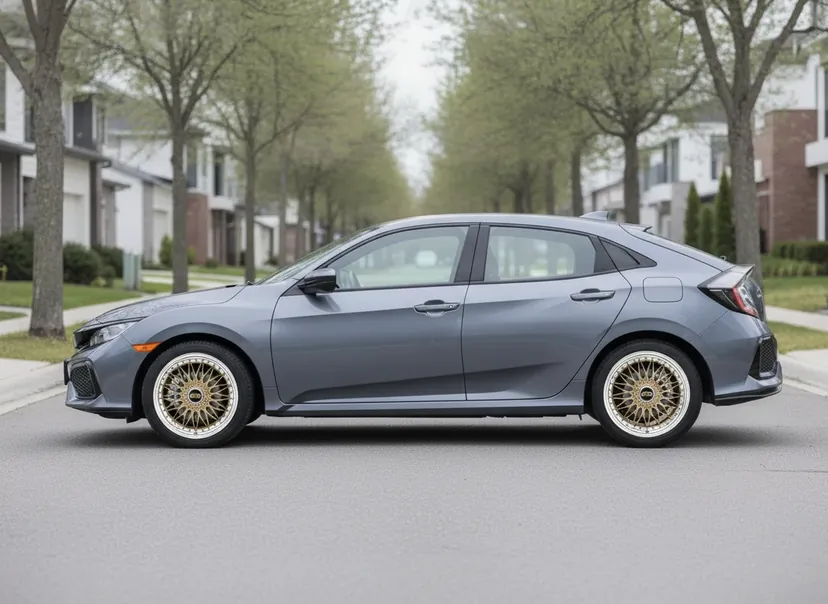
Few cars have a deeper wheel culture than the Civic, and it splits cleanly by what the owner is chasing:
- Fill the arch, don't chase diameter. The factory high-water mark is 18×8 at roughly +50 mm, which tucks noticeably inside the fender. Owners going aftermarket usually stay at 18 inches and pick a wider wheel with less offset — the 18×8.5 conversation lives in the +35 to +45 range — often alongside lowering springs. The gap is the goal, not the sidewall number.
- 17s never went out of style. On a daily Civic they keep tire prices sane, keep sidewall for broken pavement, and cut unsprung weight, which a light front-drive car feels immediately in ride and steering. Track-minded owners often move down in diameter and up in tire — the opposite of the mall look.
- Square, always. The Civic is front-wheel drive, Type R included, so staggered setups are rare and mostly counterproductive. Four matching corners also keeps tire rotation on the table.
- Finishes lean Honda. Bronze and gold have decades of history on this platform and still read as the enthusiast pick, especially against white, Rallye Red and Championship White. Gunmetal and satin black are the safe default on Sonic Gray and black cars. A polished lip lifts a dark car, then remembers every curb.
- The LX has the most to gain. If your Civic left the factory on 16-inch steel wheels under plastic covers — still standard on the base sedan — nearly any alloy transforms it. It's also where the visualizer most often talks people out of overspending: a modest 17-inch set next to a flashy 19 looks closer than the price gap suggests.
- Type R owners shop a narrower aisle.
5x120cuts the catalog down, and the popular move is trading the FL5's heavy 19×9.5 for a lighter set to carry track rubber — with the front Brembos setting the floor on how small you can go.
Wheels in the catalog
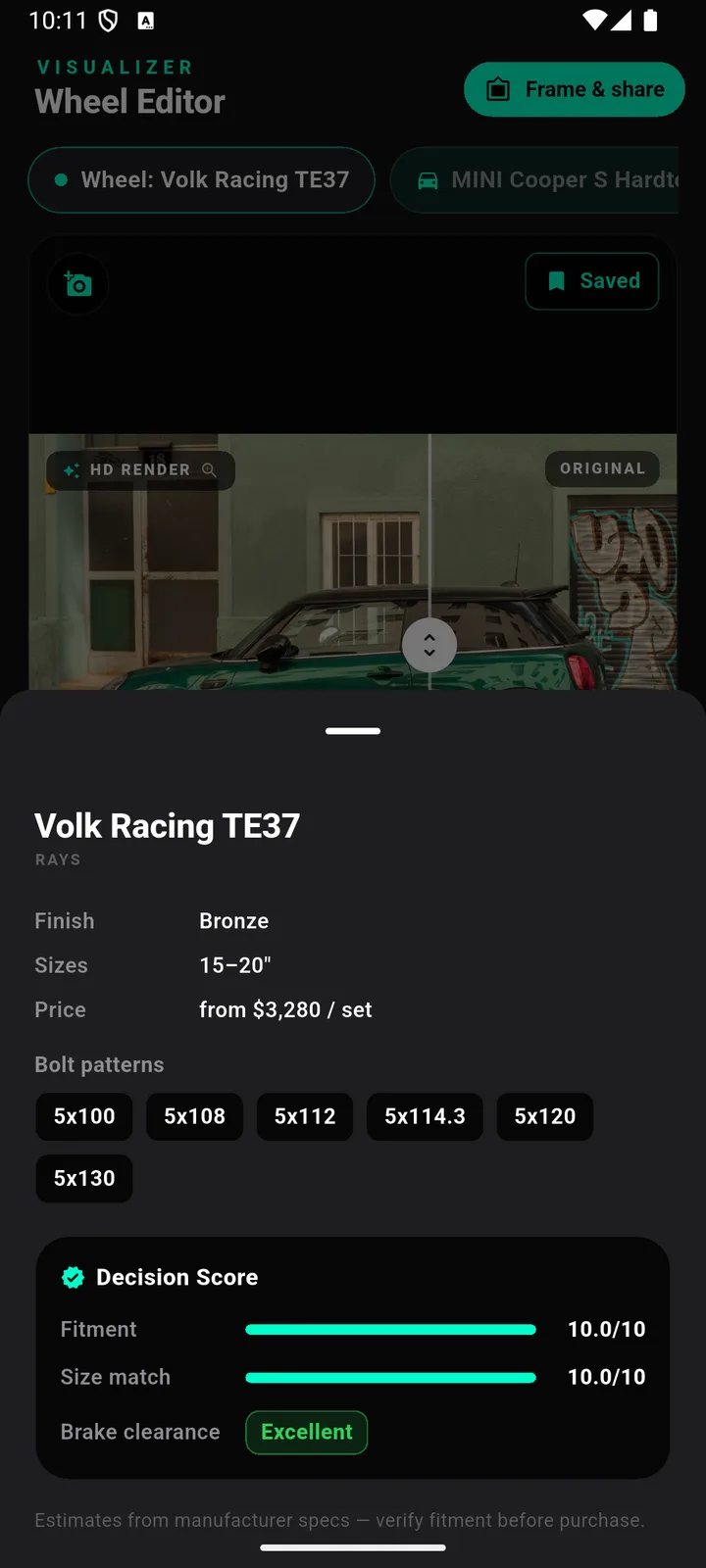
The catalog holds 1,600+ real aftermarket wheels from 30 brands, each carrying the manufacturer's own specs rather than a generic 3D model. Because 5x114.3 is the industry's most common pattern, a standard Civic sees more of that catalog than almost any other car on the site. Brands with genuine history on Hondas — Enkei, RAYS/Volk Racing, König, JNC, Kansei and ESR — are all in there, from lightweight motorsport designs to budget-friendly street sets. Type R owners see a shorter list, since 5x120 is a narrower pattern with fewer options per brand.
We won't tell you a specific wheel model fits your car from a web page. Inside the app, FITS badges and the Decision Score run that check against the pattern and sizes detected on your actual Civic, including a brake-clearance rating — and even then, confirm with the seller before you order.
FAQ
Will aftermarket wheels fit my Honda Civic?
Every Civic from the 2006 model year onward uses a 5x114.3 bolt pattern with a 64.1 mm center bore and M12x1.5 studs torqued to roughly 80 lb-ft. The exception is the Type R: it is 5x120, it runs larger M14x1.5 studs rather than the M12x1.5 used on every other Civic, and its lug nuts torque higher, to about 94 lb-ft. Two Honda details catch people out: most aftermarket wheels are bored larger than 64.1 mm and need hub-centric rings to sit true, and Honda's factory lug nuts have a rounded ball seat while most aftermarket wheels are machined for a 60-degree conical seat — so budget for new lug nuts with the wheels.
Does the Civic Type R use the same wheels as a regular Civic?
No, and it is the most expensive mistake in Civic wheel shopping. The FK8 Type R (2017–2021) and the FL5 (2023 onward) both run a 5x120 bolt pattern rather than the 5x114.3 used by every other modern Civic, so a set that bolts to an Si will not bolt to a Type R. The bore stays 64.1 mm. Factory fitment was 20x8.5 +60 on 245/30ZR20 tires for the FK8 and 19x9.5 +60 on 265/30ZR19 for the FL5. The 5x120 pattern is shared with the Acura Integra Type S and many BMWs, but BMW wheels are usually bored around 72.5 mm and need step-down rings on a Honda hub.
What size wheels came on my Civic from the factory?
Trim decides it more than year does. Across the 10th generation (2016–2021) and the 11th (2022 onward), the base LX sedan rides on 16-inch wheels with 215/55R16 tires — steel with plastic covers, not alloy — mid trims such as EX move to 17x7 with 215/50R17, and Sport, Touring, Si and hybrid Sport trims use 18x8 with 235/40R18. Published factory offsets sit near +45 mm on the 16s and 17s and around +50 mm on the 18s, though figures vary by market. The 9th generation (2012–2015) ran 15- to 17-inch wheels, with the Si on 17x7.
Will wheels from an older Civic fit a 2016 or newer one?
Only if the donor car is a 2006 or later. Honda moved the Civic from 4x100 with a 56.1 mm bore to 5x114.3 with a 64.1 mm bore for the 2006 redesign, so nothing off an EG, EK or a standard 2001–2005 car bolts on without adapters. One oddity is worth knowing on the used market: the 2004–2005 Si hatchback, the EP3, switched to five lugs partway through its run while the 2002–2003 cars stayed on four. Ask a seller for the pattern rather than trusting the years in the listing title.
Is it free, and does it work with my model year?
WheelPeek is free during the public beta, runs in your browser, and takes about ten seconds per render. It works with photos of any Civic — sedan, coupe, hatchback, Si or Type R, older cars through the current generation — because the AI reads the make, model, bolt pattern and OEM wheel sizes out of the photo rather than asking you to pick a year and trim from a menu. If your car is modified, a custom fitment override lets you tell the app what you are running so the scoring follows your build.