Wheel fitment: the numbers that decide if it works
The bolt pattern gets you onto the hub. These numbers decide whether the wheel clears, fills the arch and drives right.
Diameter and width
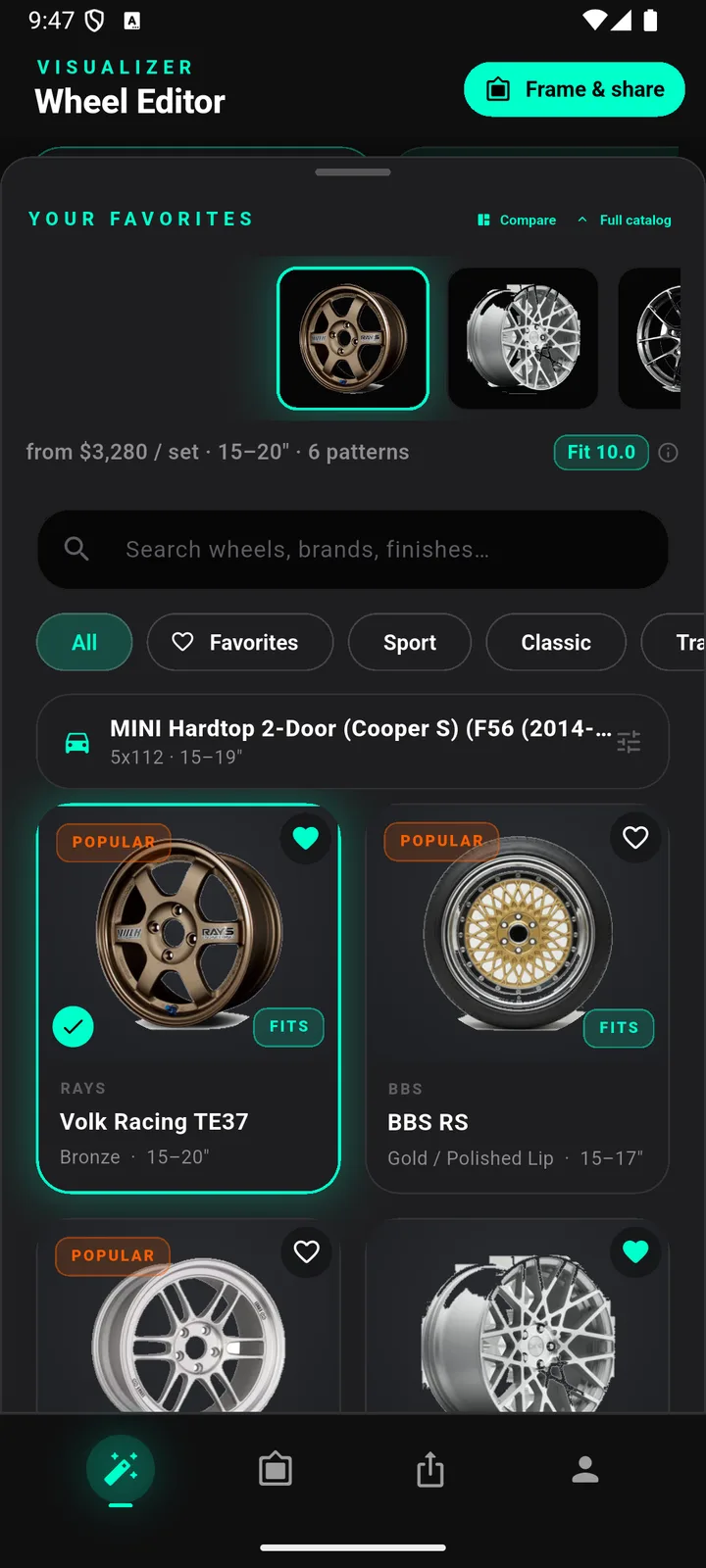
A size written 18x8.5 means 18 inches in diameter by 8.5 inches wide. Your car's OEM range — the sizes it was engineered around — is the sane baseline to work from, and staying near it is the low-risk path.
You can usually step up an inch or two in diameter and widen a little, but bigger isn't automatically better. Larger, wider wheels add weight and often a thinner tyre sidewall, which can firm up the ride and expose the wheel to more pothole damage. Extra width also raises its own clearance questions at the fender and the suspension. Treat the OEM range as your anchor and move away from it deliberately, not by default.
Offset (ET) and backspacing
Offset — written ET, from the German Einpresstiefe — is the distance in millimetres between the wheel's mounting face and its true centreline. It decides how far in or out the wheel sits:
- Positive offset moves the mounting face outward, which tucks the wheel inward, toward the car.
- Low or negative offset pushes the wheel outward, toward the fender — the classic aggressive, "flush" or poked stance.
Small changes are surprisingly visible: shift the offset by 10–15 mm and the wheel noticeably changes where it sits in the arch. Go too far inward and the wheel or tyre can foul the strut and suspension; too far outward and it catches the fender lip. Backspacing is the same measurement in old-school inches — the distance from the mounting face to the back edge of the wheel — so you'll see it quoted either way.
Plus-sizing
Plus-sizing means going up in wheel diameter while dropping to a lower-profile tyre, chosen so the overall rolling diameter stays close to stock. Keeping total height near factory is what keeps your speedometer honest and your gearing unchanged, while still leaving some sidewall to absorb bumps. Push the wheel bigger without shrinking the tyre to match and you throw off the speedo reading and invite clearance problems. The goal is a bigger wheel that still rolls the same overall height.
A useful rule of thumb: keep the overall rolling diameter within about 3% of the factory figure unless you are deliberately building for lift and clearance. That total height is the number your speedometer, odometer and gearing were calibrated around — and on modern cars it also feeds the ABS and stability-control systems, which read wheel speed to judge grip. Stray too far and the speedo reads wrong, the trip and fuel-economy math drift, and those safety systems are working from bad numbers. Change the wheel diameter freely, but bring the tyre profile with it so the whole package still rolls close to stock height.
Brake clearance
A wheel can clear your studs and still not clear your brakes. Larger calipers — and even some factory ones — sit close to the inside face of the wheel, and whether they clear comes down to the spoke profile and the shape of the barrel, not just the diameter. That's how a wheel can bolt on cleanly and still rub the caliper. It's one of the most common "why won't this fit?" surprises, and it's why brake clearance deserves a check of its own. WheelPeek flags likely conflicts with a brake-clearance label, so a caliper problem shows up before you order rather than after the box arrives.
Weight matters
Weight is easy to overlook and worth a thought. Wheels are unsprung mass — the weight your suspension has to control — so a heavier wheel dulls response and can take the edge off ride quality, while a lighter one sharpens turn-in and helps the suspension keep the tyre planted. Lighter forged wheels are the usual way to shed that rotating weight. Beyond that one line, weight is simply a trade-off you balance against price, strength and the look you're after.
Sanity-check with real data
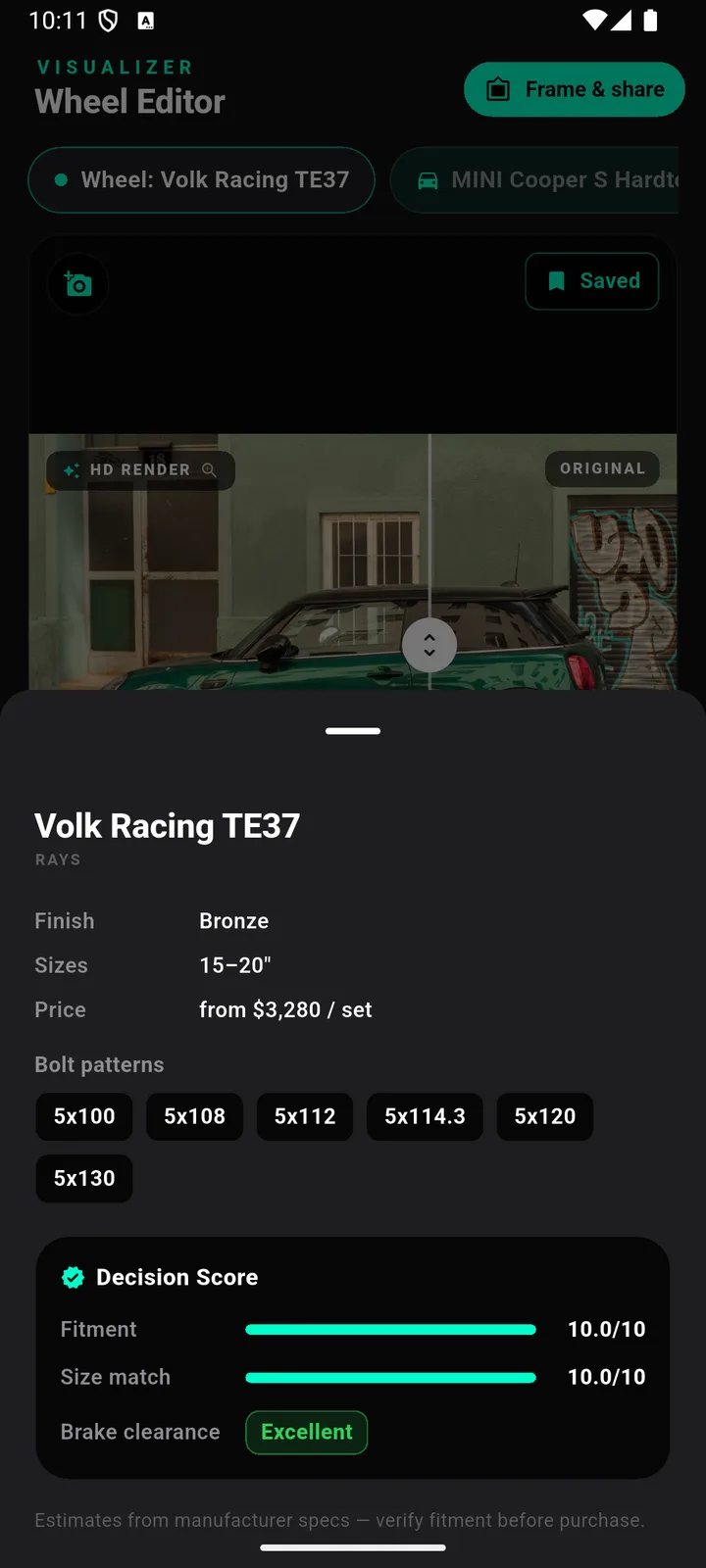
WheelPeek turns these numbers into a quick read. The Decision Score rates each wheel on two axes from real manufacturer data — Fitment from 0 to 10 against your car's bolt pattern, and Size match from 0 to 10 against your OEM range — and adds a brake-clearance label so a caliper conflict is visible at a glance. Running a lowered or swapped build? A custom fitment override lets you tell the app what you're actually on, so the score reflects your setup instead of the factory numbers.
Honest note: FITS badges and the Decision Score are estimates from manufacturer specs. Always verify bolt pattern, offset, width and brake clearance with the seller or manufacturer before ordering.
FAQ
What is wheel offset?
Offset (ET) is the distance in millimetres between the wheel's mounting face and its centreline. Positive offset tucks the wheel inward toward the car; low or negative offset pushes it outward toward the fender. Even a 10–15 mm change visibly moves how the wheel sits.
Do bigger wheels fit my car?
Often you can go up an inch or two in diameter, but it depends on width, offset, tyre choice and clearance at the fender and brakes. Keep the overall rolling diameter close to stock and treat your OEM range as the baseline. Always verify the specific setup before ordering.
Will aftermarket wheels clear my brakes?
Not always. Clearance depends on caliper size and the wheel's spoke and barrel shape, so a wheel can bolt on and still foul a caliper. Check the brake-clearance guidance for the wheel and confirm with the seller or manufacturer, especially if you run a big brake kit.