Ford Mustang Wheel Visualizer
See wheels on your own Mustang before you buy — upload a photo, pick real aftermarket wheels, and get a photoreal render in about ten seconds.
How the visualizer works on your Mustang
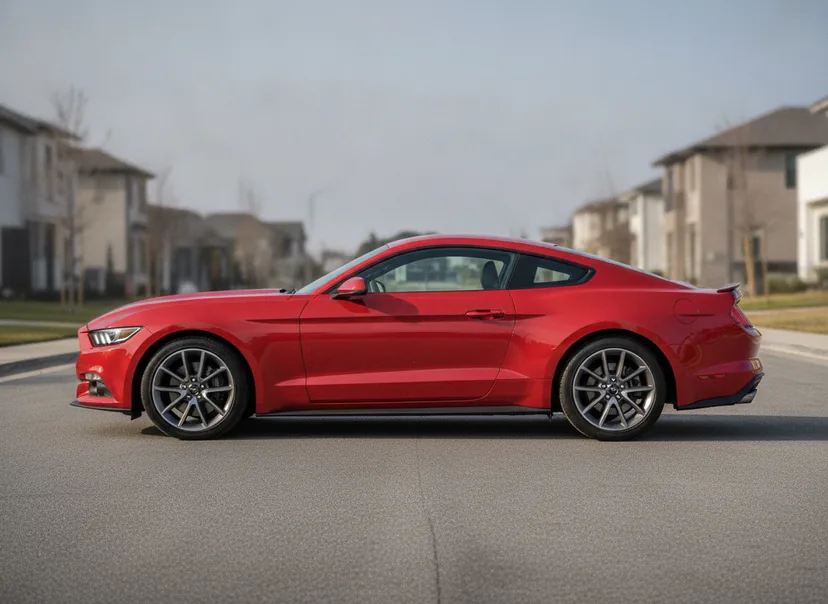
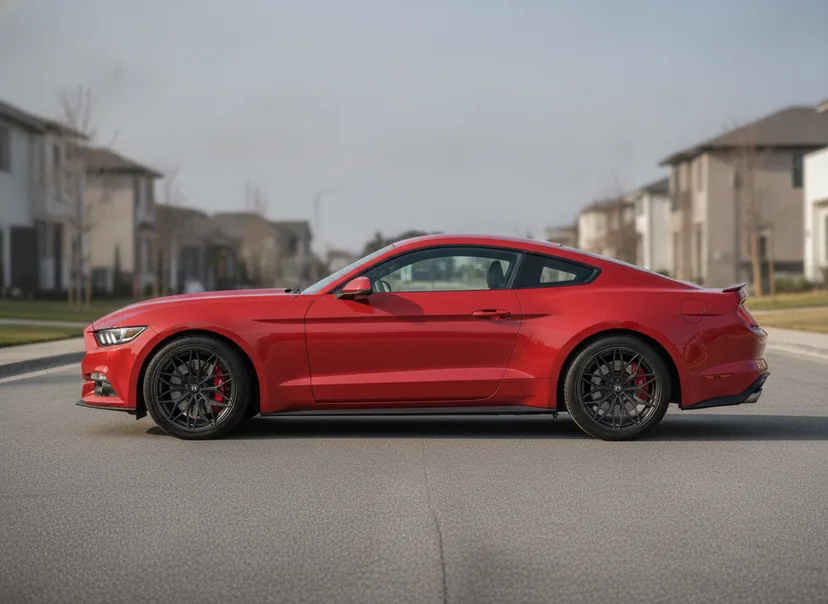
Drag the line. Actual WheelPeek output: an AI-generated demo Mustang re-rendered with Forged Metallics FM07 Vector in satin black — the same ten-second pipeline that runs on a photo of your own car.
WheelPeek works with photos of any Mustang — fastback or convertible, base EcoBoost or Dark Horse — and you don't need a VIN or a window sticker to start:
- Add a photo of your car. Open the free beta and snap or import a shot of your Mustang — a clean side or front three-quarter angle in even light renders best. Not near the car? Generate a demo car and play with it first.
- Let the AI read it. It identifies the make, model, bolt pattern and OEM wheel sizes from the photo and finds the wheels automatically, so it already knows a modern Mustang is a
5x114.3car on 17- to 20-inch rims. - Pick real wheels and render. Browse 1,600+ real wheels from 30 brands with FITS badges flagging what matches your car's pattern and sizes, then tap: a photoreal HD image replaces your photo in about ten seconds, calipers showing through the spokes — which matters more than usual if yours are painted red Brembos.
- Compare, then decide. Heart your favorites and line them up on a 2×2 or 3×3 comparison sheet — same car, same angle, only the wheels change — or share a numbered voting card so friends can reply with a number.
Try wheels on this Mustang
The renders below are real WheelPeek output on a demo Mustang; pick a wheel to swap it.
Forged Metallics FM07 Vector — satin black. Identification only; confirm fitment with the seller.
Now try it on a photo of your own Mustang — no sign-up for your first five renders
Ford Mustang wheel specs & fitment
Published factory figures for US-market cars — verify your exact year and trim before ordering.
| Generation | Bolt pattern | Center bore | OEM wheel diameters | Typical OEM tire sizes |
|---|---|---|---|---|
| Fox body (1979–1993) | 4x10⁸ (4×4.25″) |
63.4 mm | 15–17″ | 225/60R15, 225/55R16 (5.0 cars); 245/45R17 (1993 Cobra) |
| SN95 / New Edge (1994–2004) | 5x114.3 |
70.5 mm | 15–17″ | 205/65R15, 225/55R16; 245/45R17 (GT, Bullitt, Cobra) |
| S197 (2005–2014) | 5x114.3 |
70.5 mm | 16–20″ | 215/65R16, 225/60R17 (V6); 235/50R18 (GT); 255/40R19 (Brembo); 285/35R19 rear (Boss 302, GT500) |
| S550 (2015–2023) | 5x114.3 |
70.5 mm | 17–20″ | 235/55R17, 235/50R18; 255/40R19 front / 275/40R19 rear (Performance Package); 295/35R19 + 305/35R19 (GT350); 305/30R19 + 315/30R19 (GT350R); 305/30R20 + 315/30R20 (GT500) |
| S650 (2024+) | 5x114.3 |
70.5 mm | 17–20″ | 235/55R17 (base EcoBoost), 255/45R18 (GT), 265/35R20; 255/40R19 front / 275/40R19 rear (Performance Package, Dark Horse); 305/30R19 + 315/30R19 (Handling Package) |
Thirty years of Mustangs share one bolt pattern. From the 1994 SN95 through the current S650, every five-lug car is 5x114.3 on a 70.5 mm hub (some catalogs round it to 70.6) — the most widely produced pattern in the industry, so selection is huge and prices are competitive. Two details still trip people up. Most aftermarket wheels are machined oversize and need hub-centric rings to sit true on that hub; without them you get a highway vibration no balancer will fix. And the lug hardware changed: 1994–2014 cars use 1/2″-20 studs, 2015-and-newer cars M14x1.5, so buy lug nuts to match your car rather than whatever came with a used set. Fox body cars sit outside all of it on their own 4x10⁸ four-lug pattern — which is why so many end up with five-lug conversions.
The brake behind the wheel decides more than the pattern does. An S550 GT with the Performance Package runs roughly 15-inch front rotors and six-piston Brembo calipers, so it shipped on 19-inch wheels: plenty of 18-inch designs will not go over that caliper, and some 19s foul depending on spoke shape and offset. The S650 GT Performance Package and Dark Horse move up to 15.4-inch rotors and need 19- or 20-inch wheels, while a base EcoBoost on 17s or a base GT on 18s has no such problem. On a big-brake car, diameter is a floor rather than a preference — a set that looks perfect in a render can still fail the tape measure.
Honest note: these fitment specs are estimates compiled from manufacturer and published data, and they vary by trim, model year and market. Always verify bolt pattern, offset, width and brake clearance with the seller or manufacturer before ordering.
Sources & scope: the table covers the generations listed above; figures vary by trim, model year and market. Factory figures are compiled from published manufacturer specifications and cross-checked against the wheel-size.com fitment database (Ford Mustang S650, 2024+), which is also the source of the Quick fitment check preset below. Reviewed by the WheelPeek team, September 2026.
Quick fitment check: a typical factory setup here is 19×9 at ET52.5 (approx.) on 255/40R19. Model a change with the free wheel offset calculator or tire size calculator. The wheel offset visualizer guide shows what those offset changes actually look like on a car — poke, flush or tuck.
Popular Mustang setups and looks
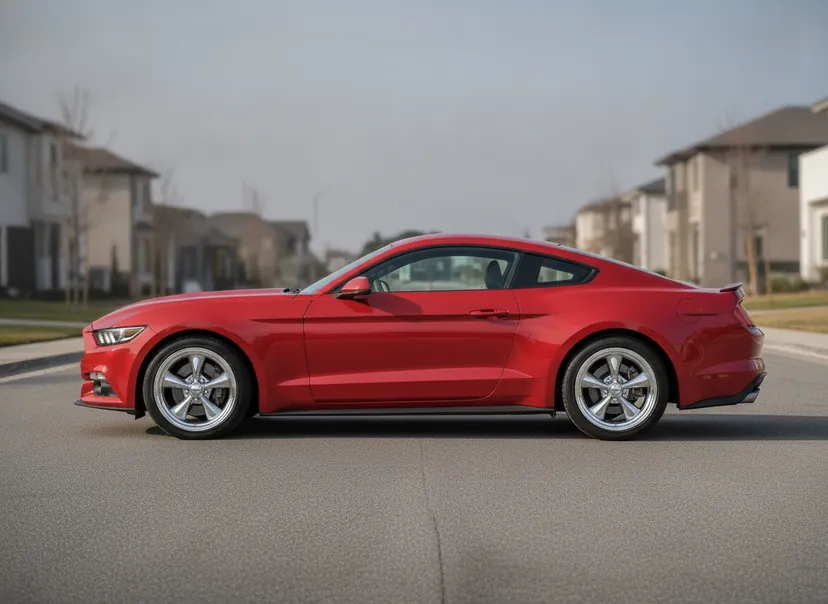
Square or staggered is the argument that never ends on this car, and the factory sits closer to the middle than either camp admits: an S550 GT Performance Package runs 19x9 front and 19x9.5 rear, an S650 Dark Horse 19x9.5 and 19x10 — half an inch of stagger, as much about proportion as grip. Street cars mostly stay near that split; track and autocross owners go square so they can rotate tires; drag builds go the other way, with a light narrow front and everything they can fit on the rear. Look at both on your own car — they read very differently over a Mustang's deep rear arches.
A few other habits show up again and again:
- 19s are the middle ground. 17s and 18s belong to track tires, winter sets and drag builds, and only fit cars without the big Brembos. 20s look best on lowered cars and ask the most of the ride.
- Factory offsets sit high. Published S550 and S650 figures land roughly in the +40 to +52 mm range, so a flusher stance usually means the mid-+30s to mid-+40s. Drop too far and the tire meets the fender lip on compression.
- Deep faces suit the body. These cars have tall arches and real wheel gap, so concave and stepped-lip designs fill the opening in a way a flat face does not.
- Finish follows paint and calipers. Satin black and gunmetal are the safe default on white, gray and black cars; bronze pops on blue and green; polished and chrome are still what the classic-muscle crowd goes for. Painted calipers are worth showing off, so open spokes cut both ways.
- Weight matters once you get wide. A 19x11 in cast aluminum gets heavy fast, which is why flow-formed sets dominate the conversation among owners who drive hard.
Wheels in the catalog
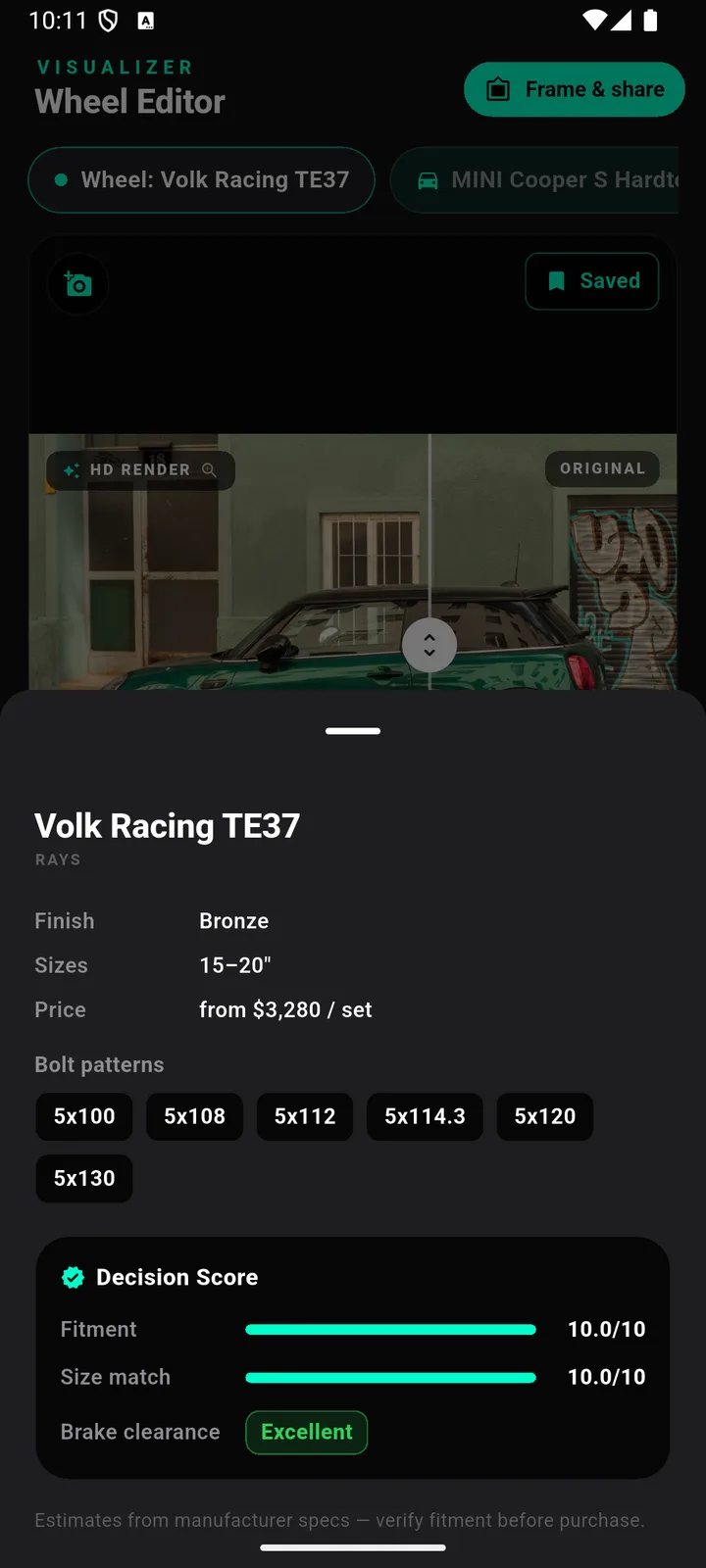
The catalog holds 1,600+ real aftermarket wheels from 30 brands, each with the manufacturer's own specs rather than a generic 3D model, and because 5x114.3 is the industry's most widely produced pattern a Mustang sees a big slice of it. Brands that come up constantly on this car — American Racing for the classic muscle look, Rotiform, Vossen and Rohana for concave and stepped-lip faces, ESR at the value end and Titan 7 for lightweight track sets — are all in there.
We won't tell you a specific wheel model fits your car from a web page. Inside the app, FITS badges and the Decision Score run that check against the pattern and sizes detected on your actual Mustang, including a brake-clearance rating that matters a great deal on Performance Package cars — and even then, confirm with the seller before you order.
FAQ
Will aftermarket wheels fit my Ford Mustang?
Every five-lug Mustang from the 1994 SN95 onward — SN95, S197, S550 and the current S650 — uses a 5x114.3 bolt pattern on a 70.5 mm center bore, so the pattern itself is one of the easiest in the aftermarket to shop for. Fox body cars from 1979 to 1993 are the exception: they are 4x10⁸ on a 63.4 mm hub, and nothing from a modern Mustang bolts to them without a five-lug conversion. Fitment still comes down to diameter, width, offset and brake clearance, and most aftermarket wheels are machined with a larger bore, so check that the seller includes hub-centric rings for the 70.5 mm hub.
Do Performance Package Brembo brakes limit which wheels I can run?
Yes, and it is the thing that catches Mustang owners out most often. An S550 GT with the Performance Package carries roughly 15-inch front rotors behind six-piston Brembo calipers, which is why it left the factory on 19-inch wheels: many 18-inch designs will not clear the caliper at all, and some 19s foul depending on spoke profile and offset. S650 GT Performance Package and Dark Horse cars move up to 15.4-inch front rotors and need 19- or 20-inch wheels. Base EcoBoost and base GT cars on the standard brakes are far more flexible. If your car has the big brakes, treat diameter as a hard floor and ask the seller for caliper clearance figures before ordering.
Square or staggered — which should I run on a Mustang?
Factory staggering on a Mustang is mild. An S550 GT Performance Package runs 19x9 front and 19x9.5 rear; an S650 Dark Horse runs 19x9.5 and 19x10. Street cars usually stay near that split because it suits the proportions and keeps the OEM tire sizes easy to buy. Owners who track or autocross often go square instead, with the same width and tire at all four corners, so they can rotate tires and stop the front axle being the limiting end. Drag setups go the other way, with a light narrow front and a wide rear on a drag radial. There is no single right answer, which is why it helps to look at both before you spend the money.
Will S197 or SN95 wheels fit an S550 or S650?
The pattern and hub carry over — 5x114.3 on a 70.5 mm bore across all three generations — so an older Mustang wheel will sit on a newer hub. Two things still need checking. Older wheels are usually narrower and smaller in diameter than modern brakes allow, so on a Performance Package or Dark Horse car they may not clear the calipers. And the lug hardware changed: 1994 to 2014 cars use 1/2-20 studs while 2015 and newer use M14x1.5, so buy lug nuts that match your car rather than reusing whatever came with the wheels. Published torque is around 100 lb-ft on the S197 and 150 lb-ft on the S550 and S650 — check your own owner's manual.
Is it free, and does it work with my model year?
WheelPeek is free during the public beta, runs in your browser, and takes about ten seconds per render. It works with photos of any Mustang, from Fox body and SN95 cars to the current S650, because the AI reads the make, model, bolt pattern and OEM wheel sizes out of the photo rather than from a year-and-trim menu. If your car is modified — a five-lug swap, a big brake kit, a wider set already fitted — a custom fitment override lets you tell the app what you are actually running so the scoring follows your build.