Ford F-150 Wheel Visualizer
See wheels on your own F-150 before you buy — upload a photo, pick real aftermarket wheels, and get a photoreal render in about ten seconds.
How the visualizer works on your F-150
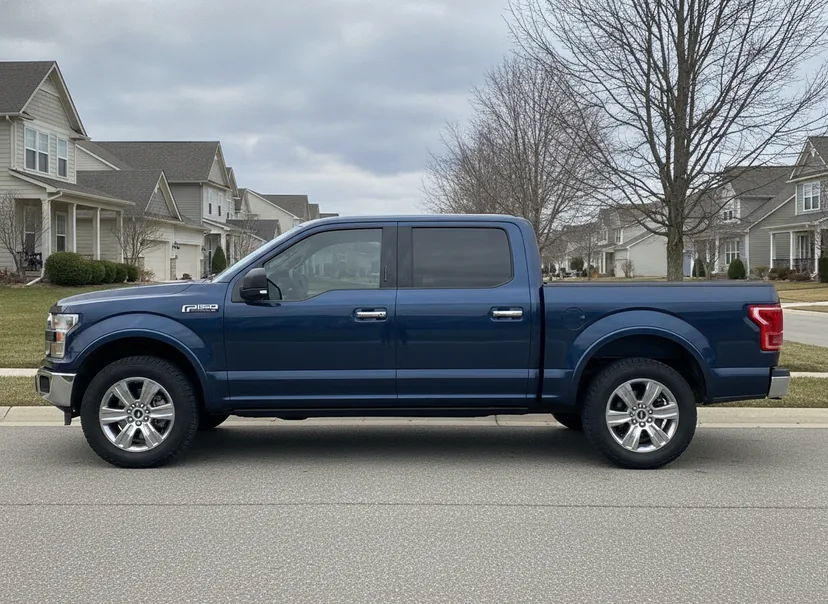
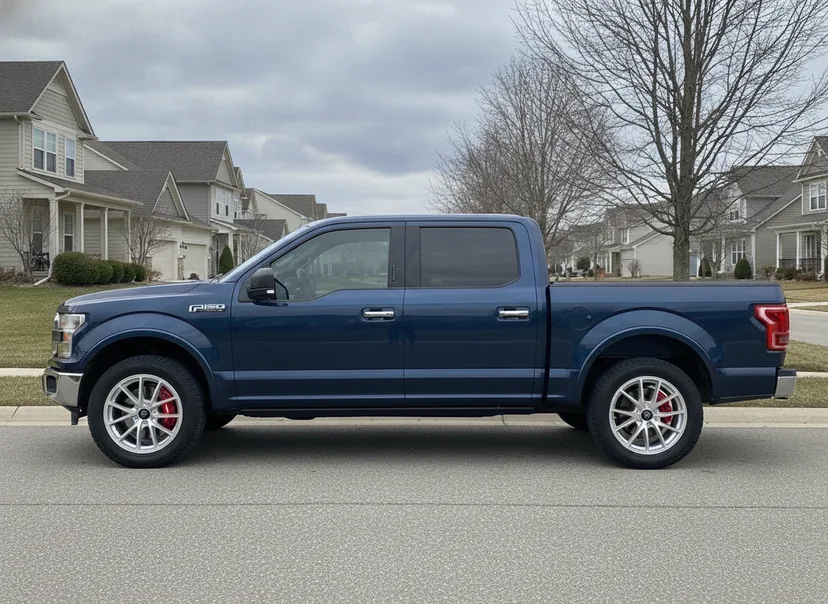
Drag the line. Actual WheelPeek output: an AI-generated demo F-150 re-rendered with Forged Metallics FM01 Stratos in bright silver — the same ten-second pipeline that runs on a photo of your own car.
A truck is one of the hardest vehicles to judge from a catalog photo: the same wheel that fills the arch on a lifted crew cab disappears on a stock XL. WheelPeek works with photos of any F-150, and you don't need a VIN or a trim code to start:
- Add a photo of your truck. Open the free beta and snap or import a shot of your F-150 — a clean side or front three-quarter angle in even light renders best. Not parked next to it? Generate a demo vehicle and experiment first.
- Let the AI read it. It identifies the make, model, bolt pattern and OEM wheel sizes from the photo, so it already knows a modern F-150 is a
6x135truck running anything from a 17-inch steel to a 22-inch alloy. - Pick real wheels and render. Browse 1,600+ real wheels from 30 brands with FITS badges flagging what matches your truck's pattern and sizes, then tap: a photoreal HD image replaces your photo in about ten seconds.
- Compare, then decide. Heart your favorites and line them up on a 2×2 or 3×3 comparison sheet — same truck, same angle, only the wheels change — or share a numbered voting card so friends can reply with a number.
Try wheels on this F-150
The renders below are real WheelPeek output on a demo F-150; pick a wheel to swap it.
Forged Metallics FM01 Stratos — bright silver. Identification only; confirm fitment with the seller.
Now try it on a photo of your own F-150 — no sign-up for your first five renders
Ford F-150 wheel specs & fitment
Published factory figures for US-market trucks — verify your exact year and trim before ordering.
| Generation | Bolt pattern | Center bore | OEM wheel sizes | Typical OEM tire sizes |
|---|---|---|---|---|
| 10th gen (1997–2003, plus the 2004 "Heritage") | 5x135 |
87.1 mm | 16×7, 17×7.5 | 235/70R16, 255/70R16, 265/70R17, 275/60R17 |
| 11th–12th gen (2004–2014) | 6x135 |
87.1 mm | 17×7.5, 18×7.5–8, 20×8.5, 22×9 | 245/70R17, 265/70R17, 275/65R18, 275/55R20 |
| 13th gen (2015–2020, aluminum body) | 6x135 |
87.1 mm | 17×7.5, 18×7.5, 20×8.5, 22×9; Raptor 17-inch | 265/70R17, 265/60R18, 275/55R20, 275/45R22; Raptor 315/70R17 |
| 14th gen (2021+, incl. Lightning) | 6x135 |
87.1 mm | 17×7.5, 18×7.5, 20×8.5, 22×9; Raptor 17-inch | 265/70R17, 265/60R18, 275/65R18, 275/60R20, 275/50R22; Tremor 275/70R18; Raptor 315/70R17 or 37×12.50R17 |
The date that matters is 2004. That is when Ford moved the F-150 from a five-lug 5x135 to the six-lug 6x135 pattern it still uses today, straight through the 2015 aluminum-body redesign, the 2021 truck and the electric Lightning. If you're shopping used wheels, that single number decides whether a set is even a candidate. One exception sits right on the boundary: for 2004 Ford sold the carryover 10th-gen body alongside the new truck as the F-150 Heritage, and the Heritage stayed 5x135 — so on a 2004 truck you have to know which body you have before you know your pattern. Two related traps catch people: 6x135 is a Ford pattern and does not interchange with the 6x139.7 that Chevrolet, GMC, Toyota and Nissan use — the dual-drilled truck wheels you'll see listed carry both patterns and a large center bore, which is exactly why they ship with hub-centric rings. And Ford changed the lug thread from M14x2.0 to M14x1.5 for 2015, so lug nuts from a 2012 truck won't thread onto a 2016 one even though the wheels themselves swap. Torque is 150 lb-ft (204 Nm) either way.
The leveling-kit question is the one that actually decides F-150 fitment. Factory wheels sit at a high offset — published figures are around +34 to +44 mm on the 7.5J and 8.5J rims — and tuck neatly inside the arch. Almost every aftermarket truck wheel is wider and much lower offset, which is what produces the leveled stance people are after, and it is where clearance runs out. On stock suspension most owners stop around a 33-inch tire (roughly 275/70R18 or 275/65R20). With a two-inch level, a 33 on a 20×9 somewhere between about −12 and +20 offset is the common landing spot, though pulling offset out toward −12 makes trimming a fender liner or clearing the crash bar at full lock increasingly likely. Real 35s generally mean a four- to six-inch lift with something like a 20×10 at −18 to −24, plus trimming and fender rolling. And the Raptor plays by its own rules entirely: wider track, its own fenders, a 17-inch wheel to clear the brakes and tire, and a factory 315/70R17 (about 34.4 inches) or a 37×12.50R17 with the 37 Performance Package.
Honest note: these fitment specs are estimates compiled from manufacturer and published data, and they vary by trim, model year, cab and bed configuration, and market. Always verify bolt pattern, offset, width and brake clearance with the seller or manufacturer before ordering.
Sources & scope: the table covers the generations listed above; figures vary by trim, model year and market. Factory figures are compiled from published manufacturer specifications and cross-checked against an F150gen14 measurement of the 2021 factory 18×8.5 ET44 wheel, which is also the source of the Quick fitment check preset below. Reviewed by the WheelPeek team, September 2026.
Quick fitment check: a typical factory setup here is 18×8.5 at ET44 on 275/65R18. Model a change with the free wheel offset calculator or tire size calculator. The wheel offset visualizer guide shows what those offset changes actually look like on a car — poke, flush or tuck.
Popular F-150 setups and looks
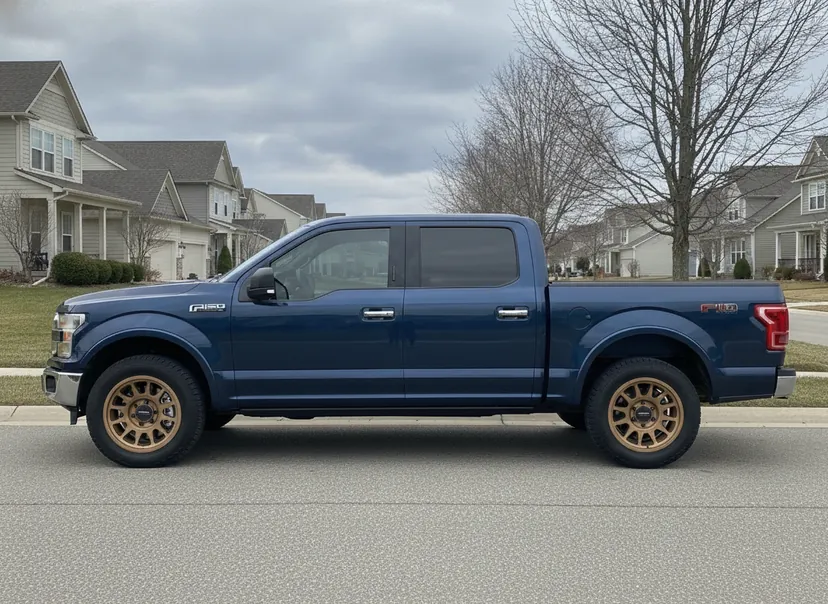
F-150 owners split into a few clear camps, and the wheel usually follows the tire rather than the other way around:
- The leveled 20 is the default. A 20-inch wheel with a 33-inch all-terrain on a two-inch level is the most-copied look on the platform — enough presence to read as modified, still civil on a commute, and it keeps a usable sidewall.
- 18s are the enthusiast's choice. Drop a size and you gain sidewall, a far better selection of load-rated all-terrains, and a cheaper set to replace. Trucks that actually see gravel and job sites tend to end up here.
- 22s are a street decision. Platinum and Limited trucks come on 22s from the factory, and the aftermarket versions look sharp on a stock-height or lowered truck — at the cost of ride quality and a tire bill that stings.
- Finish trends toward flat. Matte and satin black, gunmetal and bronze dominate; machined and polished faces suit chrome-trim Lariats and King Ranches. A simulated-beadlock ring is the shorthand for the off-road look without the upkeep of a real one.
- Load rating is not optional. A wheel has to be rated for the F-150's weight, and plenty of good-looking wheels aren't. It's the one spec worth confirming in writing before you order.
Two things owners learn late: a taller tire reads your speedometer optimistically until it's recalibrated, and a second set of wheels needs its own TPMS sensors unless you swap them over every time.
Wheels in the catalog
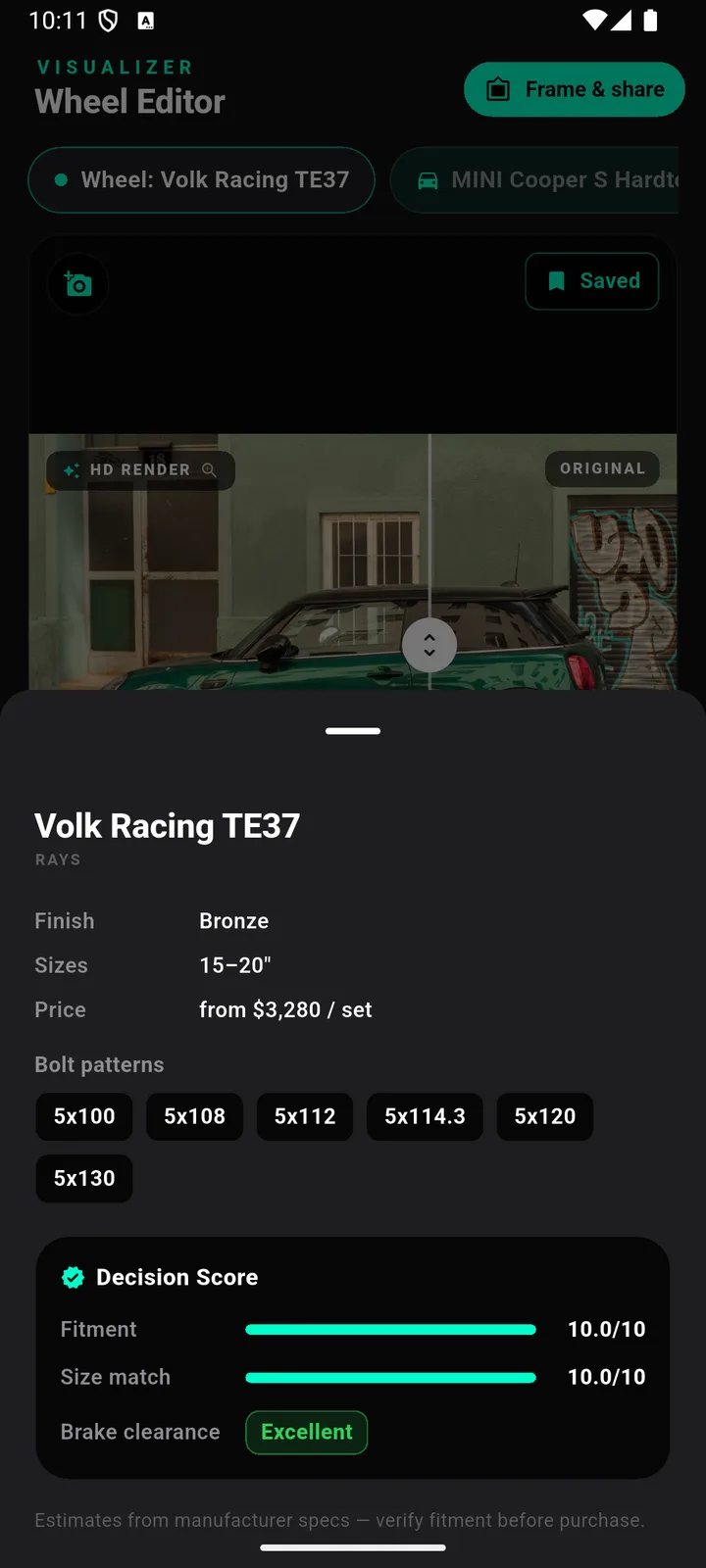
The catalog holds 1,600+ real aftermarket wheels from 30 brands, each with the manufacturer's own specs rather than a generic 3D model. On the truck side that includes Method Race Wheels and American Racing for the off-road and classic-truck end, Rotiform and fifteen52 for cleaner monoblock and utility-styled faces, and Vossen and Blaque Diamond for the polished street-truck look that suits a Platinum or a Limited.
We won't tell you from a web page that a specific wheel model fits your truck. Inside the app, FITS badges and the Decision Score run that check against the pattern and sizes detected on your actual F-150, including a brake-clearance rating — and even then, confirm load rating and offset with the seller before you order.
FAQ
Will aftermarket wheels fit my Ford F-150?
If your truck is a 2004 or newer F-150, it uses a 6x135 mm bolt pattern with an 87.1 mm center bore, and that has held true through the aluminum-body 2015 redesign, the 2021 truck and the Lightning. Trucks from 1997 to 2003, plus the 2004 Heritage, are 5x135 and share nothing with the six-lug wheels. The seven-lug 7x150 pattern is the other trap: it shows up on 2000 to 2003 trucks with the 7700 heavy-payload package and again on 2004 and later trucks ordered with the Heavy Duty Payload Package, and no ordinary five or six-lug wheel will fit one — count the lugs before you shop. Two more things to check: 6x135 is a Ford pattern that does not interchange with the 6x139.7 used by Chevrolet, GMC, Toyota and Nissan, and a truck wheel needs a load rating high enough for an F-150 — which not every good-looking wheel has.
What wheels and tires fit an F-150 with a leveling kit?
The honest answer is a range, not a number. On stock suspension most owners stop around a 33-inch tire — roughly 275/70R18 or 275/65R20 — on a wheel near the factory offset. A two-inch level makes a 33 comfortable, typically on a 20x9 between about -12 and +20 offset, though the further you pull offset out the more likely a trimmed fender liner becomes. Real 35s generally want a four to six inch lift and something like a 20x10 at -18 to -24. Cab and bed configuration change the answer, so treat published setups as starting points and confirm with your installer.
Do Raptor wheels fit a regular F-150?
The wheels themselves bolt on, because the Raptor shares the 6x135 pattern and the 87.1 mm bore with every other modern F-150. What does not transfer is everything the Raptor was built around: a much wider track with its own fenders, a 17-inch wheel so there is room for the tire and the brakes, and a factory 315/70R17 measuring roughly 34.4 inches — or a 37x12.50R17 with the 37 Performance Package. Bolting Raptor takeoffs onto a stock-height standard F-150 means finding a smaller tire for them, and Raptor fitment advice will not map onto an XLT.
Will bigger wheels hurt the ride or the fuel economy?
Usually a little of both, and on a truck the tire matters more than the rim. Moving from the 17- and 18-inch wheels up to the 22s that come on Platinum and Limited trucks trades sidewall for looks, and you feel it on broken pavement. Aggressive all-terrain and mud-terrain tires add weight, rolling resistance and noise. None of that makes the upgrade wrong — it just means the set should be a decision rather than an accident, which is easier once you have seen it on your own truck.
Is it free, and does it work with my model year?
WheelPeek is free during the public beta, runs in your browser, and takes about ten seconds per render. It works with photos of any F-150, from an old five-lug truck to a current Lightning, because the AI reads the make, model, bolt pattern and OEM wheel sizes out of the photo rather than asking you to pick a year and trim from a menu. If your truck is already leveled or lifted, a custom fitment override lets you enter what you actually run so the scoring follows your build instead of the stock numbers.