Toyota 4Runner Wheel Visualizer
See wheels on your own 4Runner before you buy — upload a photo, pick real aftermarket wheels, and get a photoreal render in about ten seconds.
How the visualizer works on your 4Runner
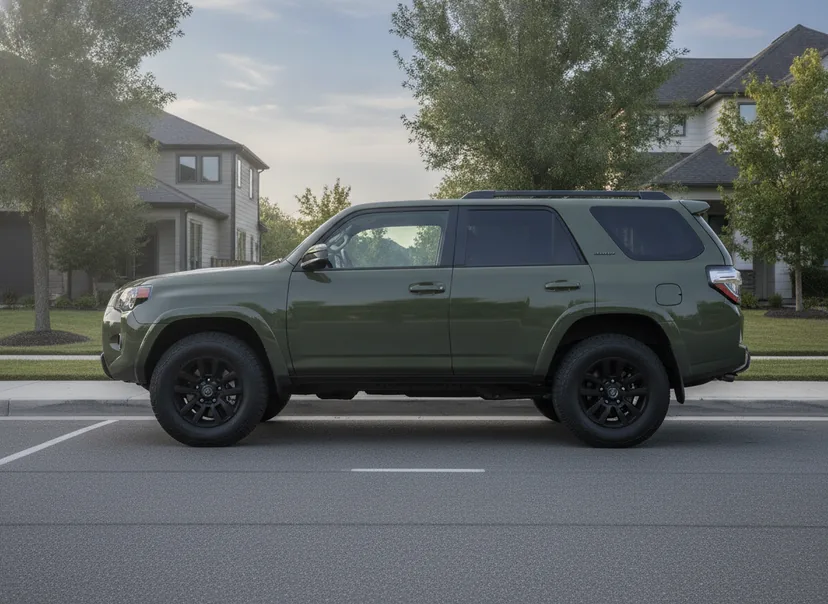
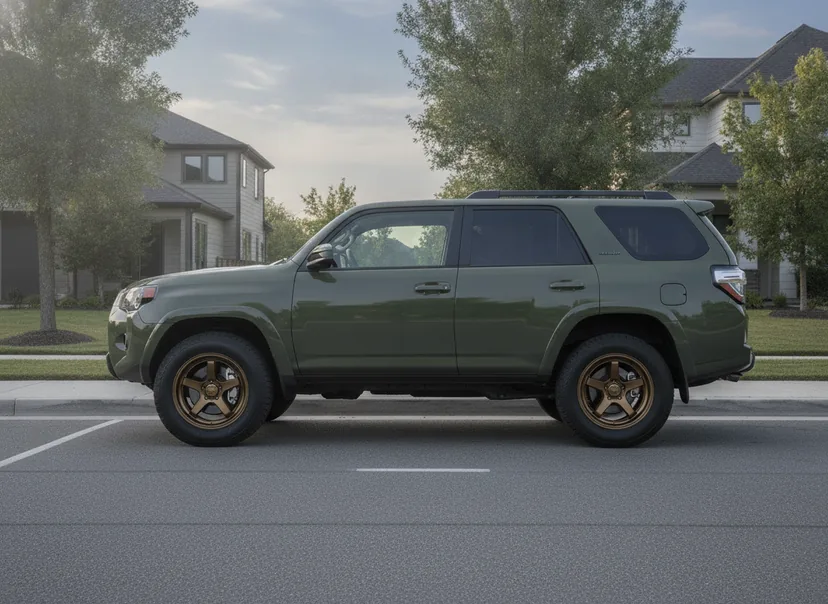
Drag the line. Actual WheelPeek output: an AI-generated demo 4Runner re-rendered with Forged Metallics FM05 Ronin in gloss bronze — the same ten-second pipeline that runs on a photo of your own car.
WheelPeek works with photos of any 4Runner — stock SR5, lifted TRD Off-Road, 20-inch Limited — and you don't need a VIN or a trim code to start, because it reads the truck itself:
- Add a photo of your 4Runner. Open the free beta and snap or import a shot — a clean side or front three-quarter angle in even light renders best, and a flat driveway beats a rutted trail for a first try. Not near the truck? Generate a demo car and play with it first.
- Let the AI read it. It identifies the make, model, bolt pattern and OEM wheel sizes from the photo and finds the wheels automatically, so it already knows a 4Runner is a six-lug
6x139.7truck running 17- to 20-inch rims. - Pick real wheels and render. Browse 1,600+ real wheels from 30 brands with FITS badges flagging what matches your truck's pattern and sizes, then tap: a photoreal HD image replaces your photo in about ten seconds, right down to how a bronze face reads against your paint.
- Compare, then decide. Heart your favorites and line them up on a 2×2 or 3×3 comparison sheet — same truck, same angle, only the wheels change — or share a numbered voting card so the group chat can reply with a number.
Try wheels on this 4Runner
The renders below are real WheelPeek output on a demo 4Runner; pick a wheel to swap it.
Forged Metallics FM05 Ronin — gloss bronze. Identification only; confirm fitment with the seller.
Now try it on a photo of your own 4Runner — no sign-up for your first five renders
Toyota 4Runner wheel specs & fitment
Published factory figures for US-market trucks — verify your exact year and trim before ordering.
| Generation | Bolt pattern | Center bore | OEM wheel sizes | Typical OEM tire sizes |
|---|---|---|---|---|
| 4th gen (2003–2009) | 6x139.7 |
106.1 mm | 16×7, 17×7.5, 18×7.5 | 265/70R16, 265/65R17, 265/60R18 |
| 5th gen (2010–2024) | 6x139.7 |
106.1 mm | 17×7–7.5; 20×7 (Limited) | 265/70R17; Limited 245/60R20 |
| 6th gen (2025+) | 6x139.7 |
95.1 mm | 17×7 (SR5), 18×7.5, 20×8 | 245/70R17, 265/70R18, 265/55R20 |
The good news is the constant: 6x139.7 — six lugs on a 5.5-inch circle — has been the 4Runner's pattern since the 1990s, and it is shared with the Tacoma, the FJ Cruiser, and older Tundras and Sequoias. No pattern in the off-road aftermarket is better served, in widths and offsets no five-lug car ever sees.
The part that catches people out is the hub. Toyota builds these hub-centric, so the wheel is centered by the machined bore rather than by the lugs, and that bore changed with the new truck. The 3rd through 5th generations all use a 106.1 mm bore with M12x1.5 studs; the 2025 6th generation moved onto 2024+ Tacoma hardware and dropped to a 95.1 mm bore on M14x1.5 studs. Offsets moved too. The 5th gen's factory 17s sit around +15 mm, while published 6th gen figures cluster near +45 to +55 mm on most trims with the TRD Pro and Trailhunter reported closer to +20 mm — sources still disagree there, so read the casting on the back of your own wheel rather than trusting a listing.
Honest note: these fitment specs are estimates compiled from manufacturer and published data, and they vary by trim, model year and market. Always verify bolt pattern, offset, width and brake clearance with the seller or manufacturer before ordering.
Sources & scope: the table covers the generations listed above; figures vary by trim, model year and market. Factory figures are compiled from published manufacturer specifications and cross-checked against the wheel-size.com fitment database (Toyota 4Runner, 2020), which is also the source of the Quick fitment check preset below. Reviewed by the WheelPeek team, September 2026.
Quick fitment check: a typical factory setup here is 17×7.5 at ET15 on 265/70R17. Model a change with the free wheel offset calculator or tire size calculator. The wheel offset visualizer guide shows what those offset changes actually look like on a car — poke, flush or tuck.
Popular 4Runner setups and looks
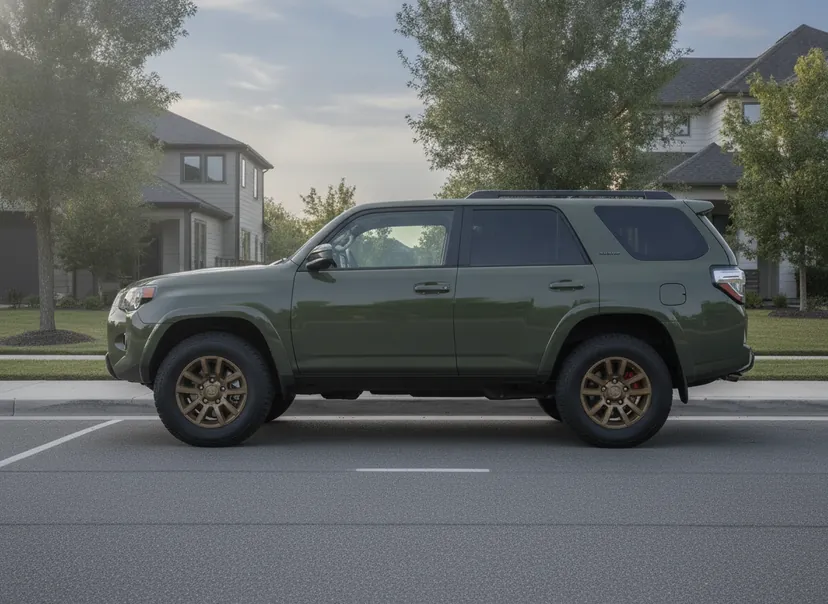
The classic 4Runner setup is a 17x8.5 wheel at roughly 0 to −12 mm offset with a 285/70R17 all-terrain — a tire that measures about 32.7 inches tall and is universally called a 33. It is the look most people picture when they picture a built 4Runner: arches filled, stance widened, a chunky sidewall you can air down. It is also not free. On stock suspension a 285 commonly wants the mud flaps gone, the fender liner pushed back, or a little trimming, and many owners end up with a lift or level and aftermarket upper control arms before it stops touching. Dropping the offset also loads the wheel bearings harder and throws more spray at the paint. If you want the look without the project, 275/70R17 on a milder offset is the honest middle ground, and the factory 265/70R17 fits with nothing to think about.
Beyond that headline setup, a few habits show up over and over on this truck:
- 17s dominate, and it isn't nostalgia. The best all-terrain and mud-terrain tires with real load ratings are cheapest and most plentiful in 17-inch sizes, and the taller sidewall survives rocks and low pressures better than a 20 does.
- Two camps, one truck. Off-road builds go matte black, satin bronze or gunmetal with simulated beadlock rings; Limited and TRD Sport owners keep the 20s and shop machined faces and gloss black. Decide which one you're building before you shop.
- The TRD look is a finish as much as a wheel. Bronze took over after the TRD Pro made it a signature color, and it reads especially well against white, Lunar Rock, Cement and black paint. It is also the finish most likely to look wrong in a catalog photo and right on your own truck, which is exactly what a render is for.
- Check load rating, not just looks. A 4Runner is a body-on-frame SUV in the two-and-a-half-ton range, and it can tow. Any wheel you buy needs a load rating that covers it — a pretty wheel rated for a sedan is not a candidate.
- Match the spare if you can. The full-size spare lives under the rear, and a fifth matching wheel turns a flat into an inconvenience rather than a tow — budget for it before the set is discontinued.
Wheels in the catalog
The catalog holds 1,600+ real aftermarket wheels from 30 brands, each with the manufacturer's own specs rather than a generic 3D model. Because 6x139.7 is the backbone of the truck and off-road market, the 4Runner sees plenty of it. Names that come up constantly on these — Method Race Wheels, fifteen52, American Racing, Rotiform, Enkei and, for the 20-inch Limited crowd, Vossen — are all in there, covering simulated-beadlock trail designs, lightweight rally-flavored faces and cleaner street looks.
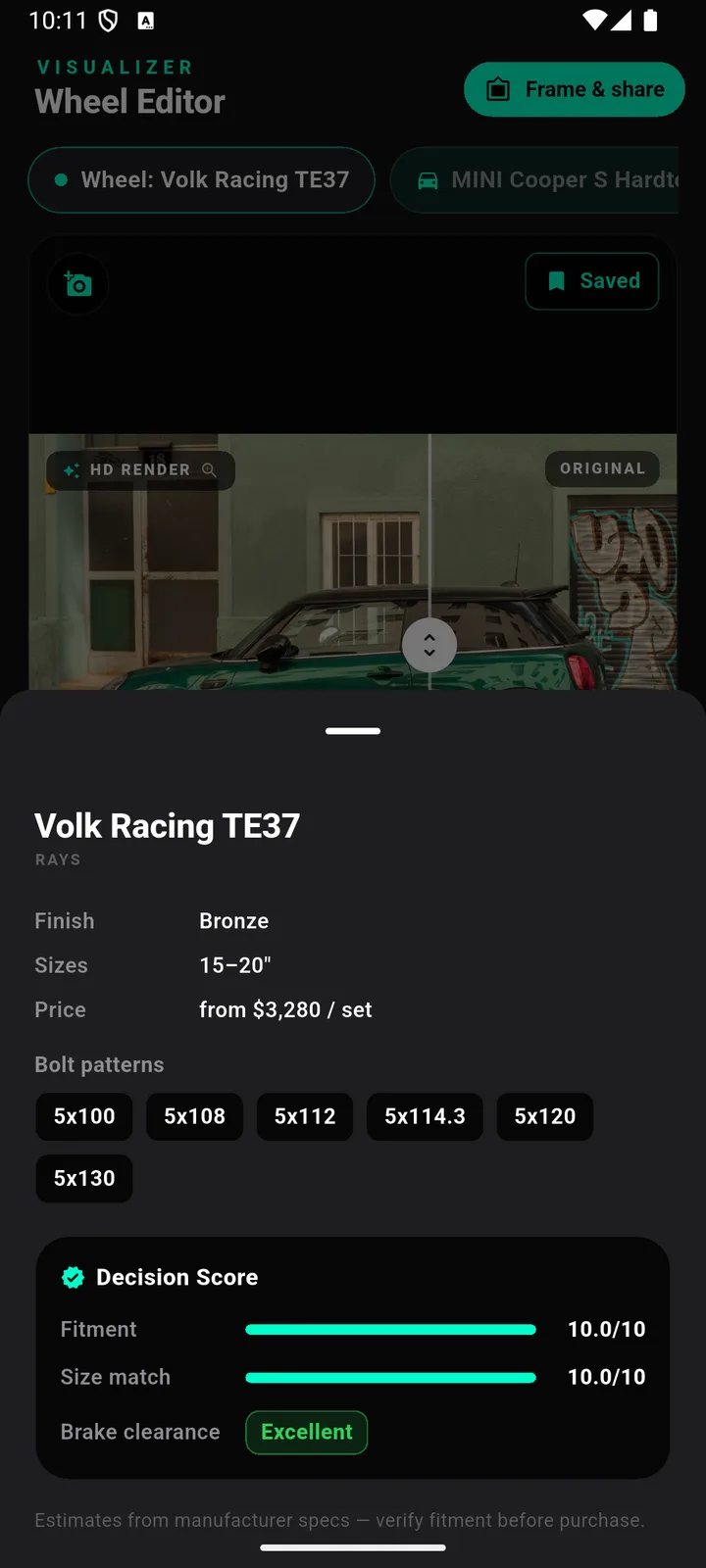
We won't tell you a specific wheel model fits your truck from a web page. Inside the app, FITS badges and the Decision Score do that check against the pattern and sizes detected on your actual 4Runner, including a brake-clearance rating — and even then, confirm with the seller before you order.
FAQ
Will aftermarket wheels fit my Toyota 4Runner?
Every 4Runner from the 3rd generation onward uses the 6x139.7 bolt pattern, also written 6x5.5 inches — the same six-lug pattern as the Tacoma, the FJ Cruiser and the older Tundra and Sequoia — note the 2008–2022 Sequoia is the odd one out on 5x150. That is the best-supported truck pattern in the off-road aftermarket, so the catalog is enormous. The pattern alone does not settle it, though: width, offset, hub bore and brake clearance all still have to line up, and on a 4Runner the tire you plan to run matters as much as the wheel.
Do 5th gen 4Runner wheels fit the 2025+ 6th gen?
Not cleanly, and this is the single most expensive mistake being made on 4Runner wheels right now. The bolt pattern carried over unchanged at 6x139.7, but the 6th generation moved to the 2024+ Tacoma hardware: the hub bore shrank from 106.1 mm to 95.1 mm and the studs grew from M12x1.5 to M14x1.5. A 5th gen wheel will bolt on with the correct new lug nuts, but its 106.1 mm bore sits loose on a 95.1 mm hub, so it is lug-centric rather than hub-centric and can vibrate at highway speed. Hub-centric rings that step 106.1 down to 95.1 are the normal fix — confirm with the seller that the correct rings and lug nuts are included before you order.
What wheel and tire size do most 4Runner owners actually run?
On the 5th generation the classic build is a 17x8.5 wheel with an offset somewhere between 0 and about -12 mm, wrapped in a 285/70R17 all-terrain that measures roughly 32.7 inches tall. It fills the arches, moves the tire outboard for a wider stance and clears aftermarket upper control arms. Be honest with yourself about the cost, though: on stock suspension 285s commonly need the mud flaps removed, the fender liner pushed back or some trimming, and plenty of owners end up adding a lift or level and upper control arms. If you want a bolt-on answer, 265/70R17 is the factory size and fits with no drama, and 275/70R17 is the popular middle step.
Do bigger wheels and tires hurt ride or fuel economy on a 4Runner?
Usually yes, and the tire does more of the damage than the wheel. A load-rated 33-inch all-terrain or mud-terrain can weigh a great deal more than the factory tire, and that unsprung, rotating weight shows up as slower acceleration, longer stopping distances and a drop in fuel economy. Going taller also makes the speedometer and odometer read low unless the size is recalibrated. Going the other way, 20-inch wheels with the short 245/60R20 or 265/55R20 sidewall look sharp on pavement but give up compliance on broken roads and leave less rubber protecting the rim.
Is it free, and does it work with my model year?
WheelPeek is free during the public beta, runs in your browser, and takes about ten seconds per render. It works with photos of any 4Runner — a 2005 Sport, a 2019 TRD Off-Road, a 2026 Trailhunter — because the AI reads the make, model, bolt pattern and OEM wheel sizes out of the photo instead of asking you to pick a year and trim from a menu. If your 4Runner is already lifted or running a custom setup, a fitment override lets you enter what you are actually on so the scoring matches your build rather than the factory numbers.